You got the applause you craved, but it felt hollow. Here’s why.
In one of my earliest memories, I’m four years old, standing barefoot on a grassy hill at some sort of summer camp. I don’t know the other kids. They don’t want to know me.
And then it came, like a bolt from the blue. These are not my people. I’m not from around here. In the memory, I can feel myself looking up to the sky, searching for my true home.
It’s a tantalizing recollection. By any measure, life on Earth was quite new to me, and I had already decided I was secretly special – an altogether different kind of being who didn’t think, feel or behave like everyone else.
Then the heartbreaking loneliness rushed in.
What does it mean?
Epictetus wrote, “It’s not what happens to you, but how you react to it that matters.” And “what happens to you” includes, not only external events, but your own thoughts.
When I thought I’m not from around here, I could have decided it meant I came to this world with something uniquely valuable to offer. Instead, I actively decided that my brand of different was more like weird, and I’d better not let anyone find out. I decided, in that moment, to hide.
How do you hide when you’re 4 (or 44)? Sometimes you shrink. You stop raising your hand. You hang out in the back of the class or stand in the corner at parties with a half empty cup, avoiding eye contact at all costs. And I did plenty of that.
But there’s another way to hide. You can do exactly what’s expected of you. Or more than what’s expected of you. You can become the golden child.
For most of my life I spray-painted myself like the ladies in Goldfinger. I wore the mask of what I was supposed to be. I said all the right words, did all the right things, and rattled off all the right answers.
The whole time it felt hollow. But I lapped up the praise. I super-glued that mask to my face. It became me, or maybe the other way around. But lately I’ve been wondering:
What happens when we receive praise, not for who we are, but for who we pretend to be?
The need to be seen
We all came screaming into the world with an inherent need to be seen. Ideally, we are seen first by our parents – not for what we do but for who we are. Attuned parents naturally recognize the unique qualities of each child and encourage them to become who they already are.
Does that happen in real life? Because it didn’t happen to me.
My parents were emotionally immature train wrecks who couldn’t see me past their own projections. Oof, that came out harsh. But we’re all doing the best we can with the resources we have. And so were they.
From my earliest memories, I was expected to perform. Sit still. Be quiet. Say please and thank you. Eat what’s on your plate. Don’t cry. Wake up. Go to sleep. Don’t you dare touch anything in this store or we will go to the car.
One of the most caring encounters I can remember happened when I was six. I wandered off in a shoe store and took down one of the boxes to look at the fancy high heels inside. I was having trouble fitting them back into the box when a sales lady came over, knelt next to me, and showed me how to do it. I don’t think anyone ever showed me how to do something so gently. Then my mom came around the corner and shouted at me for making a mess and wasting that lady’s time.
I am so sad for that little girl.
School was worse. My first day of first grade, a boy said I couldn’t play with him because I was younger than everyone else. I was teased for being fat from second grade on. In fourth grade, the other girls made up a game where they whole point was to exclude me. I can remember every time a classmate played with me at recess, because it rarely happened.
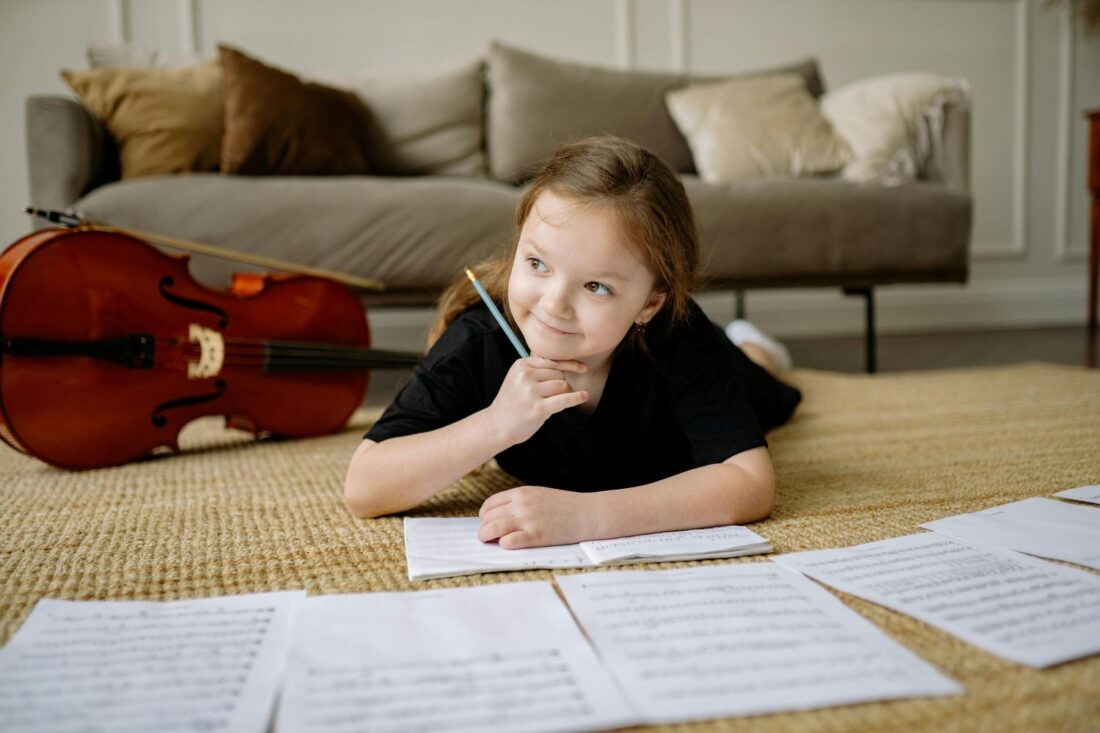
At the same time, I excelled in the classroom. I routinely got straight As. I completed my work so fast, my teachers had a hard time keeping me busy. When the time came, I chose ‘cello as my instrument, and I excelled at that too.
None of that was me. It was the mask.
Actual me loved horses from the day I was born. I calculated the size of our backyard to determine if we could get a pony. I had dozens of My Little Ponys and shelves full of Breyers. My favorite book was The Black Stallion by Walter Farley.
My parents didn’t get it, but they finally agreed to let me start riding lessons when I was 8. A few years later, my father told me I had to choose: riding lessons or ‘cello lessons. He might as well have asked me to choose between the mask and the real me. But I knew it was a false choice. I gave up riding.
I could go on and on but if you’re still reading, you get it.
Ultimately, I felt that I was too different, too weird, too unlovable. So I became somebody else. And it’s taken me until now to begin to peel the mask away and start wondering who I really am underneath.
The adaptation and its cost
It would be easy to fall into shame here. I know because I’ve done it over and over again and I am so freaking tired of that spiral.
I think of it like this: I didn’t choose the mask life. The mask life chose me. Because I was a child, and children need to be seen and loved more than anything.
The mask was nothing more than an adaptation that allowed me to survive the emotional neglect, the conspiratorial exclusion, and the outright rejection.
I would like to say that I’m grateful for that, but honestly I’m just not there yet.
Here’s the thing: none of the recognition truly mattered because it wasn’t for me. It was for the mask.
Not to mention, it took every bit of energy I had to manage other peoples’ perceptions of me. I was living a lie 24/7. It was exhausting. And it attracted all kinds of wrong into my life – things that felt as hollow as I did, people who never bothered to look at what was underneath.
This is the difference between achievement and fulfillment. All I wanted was to live in the country and take care of horses. I wanted the smells and the sun and the dirt under my fingernails.
Over time, the brave face becomes armor. The fear of being found out as too much or not enough becomes debilitating. I thought I’d quieted the longing to be seen without performance.
But it never really goes away.
Reclaiming your whole self
The task of discovering who you are beneath the mask is fraught with peril. You will stick one toe in the pond and then retreat to the safety of what’s known, again and again. But asking the question is enough in the beginning, because your soul takes notice.
Soon enough, a series of small changes start to show up: making new friends, walking away from relationships that don’t serve you, dabbling in hobbies you enjoyed as a child. You experiment with different ways of being like trying on coats at the outlets.
Next thing you know, you’re on that farm with those horses and that bright sun and that dirt under your fingernails.
Putting it like that makes it sound simple. And it is. But it’s not easy. What if I take off this mask and I’m a monster underneath? Or worse, what if 4-year-old me was tripping on Benadryl and I’m not that special after all?
Learning to be seen without the mask is about disappointing others in service of your truth. It’s about being seen by fewer people, but for real. It’s about choosing to live in your light without demanding recognition.
Most of all, it’s about making peace with the fear that you may live your entire life without a single person appreciating who you really are.
Or, you just might shine your truth like a lighthouse and, at last, your people will find you. This time, the applause will be real, and it will ring true.
Comments (0)